Table of Contents
In the advanced economies of the West, the shift from cash to digital was a slow, multi-decade evolution. In emerging markets across Southeast Asia, Latin America, and Africa, the change is happening at breakneck speed. Yet, despite the surge in smartphone adoption, a formidable barrier remains – the trust deficit.
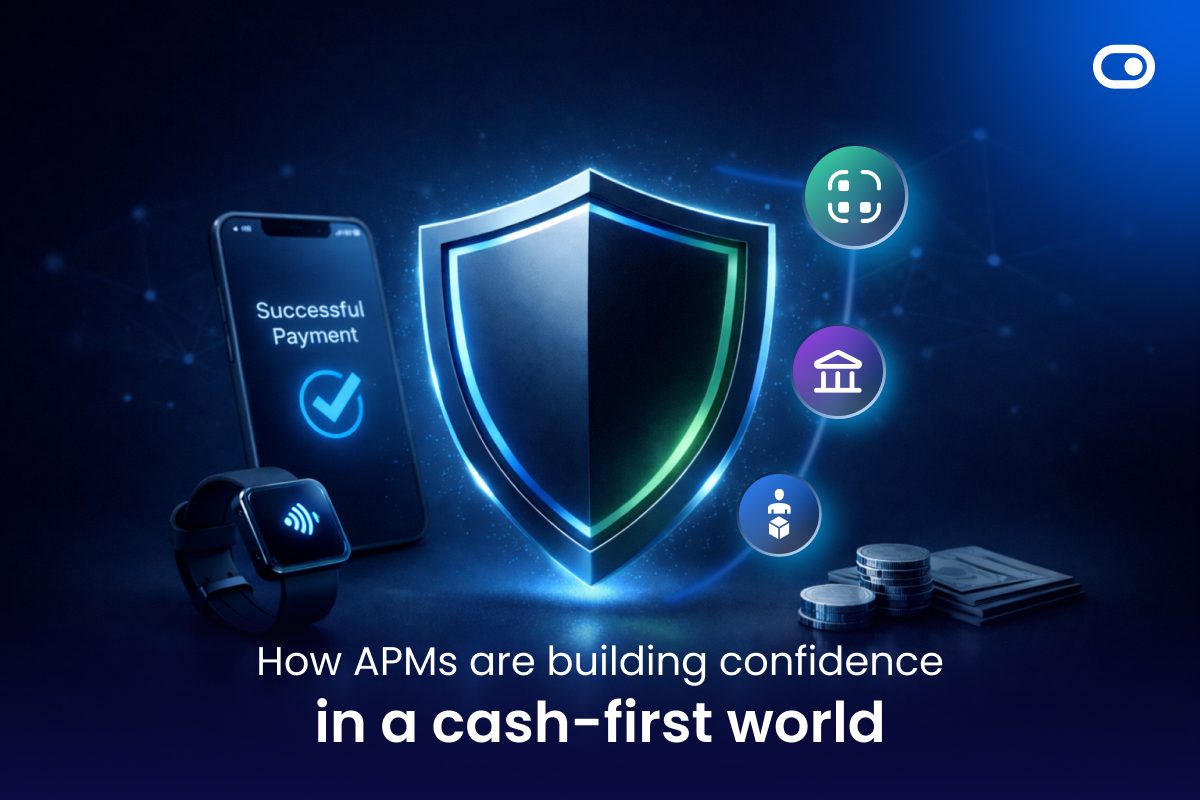
For billions of consumers, cash is the ultimate “low-trust” solution. It requires no bank, no internet connection, and no faith in a third-party intermediary. To move these populations toward digital commerce, Alternative Payment Methods (APMs) have had to do more than provide a “pay” button. They have had to build a digital ecosystem that feels as reliable, transparent, and immediate as physical currency.
As we look at the landscape in 2026, we see that the most successful APMs are winning not through convenience alone, but by systematically dismantling the barriers of distrust.
Understanding the root of the trust deficit
To solve a problem, you must first understand its origin. In cash-first societies, the hesitation to “go digital” usually stems from three core fears:
- Transparency and hidden costs: The fear that a digital transaction will come with unexpected fees or “disappearing” funds.
- Reliability and system failure: The concern that a payment will fail mid-transaction, leaving the consumer without their money and without the goods they intended to buy.
- Security and anonymity: In many regions, there is a deep-seated skepticism toward centralized institutions and a desire for the privacy that physical cash naturally provides
The three pillars of digital trust in 2026
In 2026, the leading APMs have addressed these fears by focusing on three technological pillars: immediacy, offline-to-online bridge, and verified transparency.
1. Immediacy: Replicating the “finality” of cash
The greatest strength of cash is that once it changes hands, the deal is done. Legacy digital payments often lacked this. A credit card transaction might stay “pending” for days, and a wire transfer could take even longer.
Modern APMs, especially Account-to-Account (A2A) schemes like in Brazil or India, have conquered this by offering instant settlement finality. When a user pays via a QR code in a local market, both the merchant and the customer receive an instant notification of success. This immediate feedback loop is the digital equivalent of hearing the cash register ring.
2. The offline-to-online bridge (O2O)
One of the most effective ways APMs build trust is by meeting users where they are: in the physical world. Vouchers and “cash-in” points allow users to digitize their physical currency at a trusted local shop.
By allowing a customer to walk into a corner store, hand over physical cash, and receive a digital credit on their phone, APMs bridge the psychological gap. The user sees their cash “transform” into a digital asset in a familiar environment. This creates a foundation of confidence that eventually leads to purely digital, account-based transactions.
3. Verified transparency and biometrics
Trust is also built through the user interface. In 2026, the rise of biometric authentication (fingerprint or facial recognition) has replaced the “scary” process of entering card numbers. When a user authorizes a payment with their own face, the feeling of control is restored. Furthermore, real-time “trust orchestration”, where the system clearly displays the identity of the merchant and the exact breakdown of any fees, eliminates the fear of the unknown.
The strategic role of gateway technology in trust
While a consumer might trust their local eWallet, a global merchant needs to trust that the thousands of different local eWallets they accept are secure and reliable. This is where the technology enabler becomes the ultimate guardian of trust.
A B2B gateway technology like Zota doesn’t just “connect” payments, it provides the infrastructure of confidence required for global commerce.

Building trust through resilience
If a digital system fails even once, a cash-first consumer may never return to it. Therefore, uptime and redundancy are not just technical metrics, they are trust metrics.
Zota’s technology enables access to a multi-acquirer network that ensures if one pathway is down, the transaction is automatically rerouted. This “invisible” resilience means the customer never experiences a “system down” message, protecting the merchant’s reputation and the user’s trust in digital payments.
Data integrity and ISO 20022
Trust is also about information. As we move to the ISO 20022 standard, payments now carry “rich data.” This means that every transaction contains a clear, unalterable record of what was purchased and why.
Through Zota’s platform, clients can utilize this high-quality data to provide their customers with instant, clear receipts and transaction histories. When a customer can see exactly where their money went in a structured, professional format, the trust deficit begins to close.
Fraud prevention without friction
Nothing kills trust faster than fraud. However, aggressive fraud prevention that blocks legitimate transactions (false positives) is equally damaging.
Zota’s smart routing and risk management tools use AI to distinguish between a risky transaction and a legitimate local user. By reducing the friction of security while maintaining a high shield against actual threats, Zota’s technology helps merchants build a “safe haven” for digital commerce in high-risk regions.
From cash-first to trust-first
The transition from a cash-first world to a digital-first one is not a technological challenge, it is a human one. The markets that are growing the fastest in 2026 are those where APMs have successfully translated the “certainty” of cash into a digital experience.
For the global merchant, the goal is clear. To provide a payment experience that feels local, transparent, and bulletproof. By leveraging the right gateway technology, you can bridge the trust deficit, turning skeptical cash-users into loyal digital customers. Get in touch with us today.
FAQ
Why is cash still so popular in regions with high smartphone adoption?
Cash remains popular because it offers perceived certainty and privacy. In many emerging markets, consumers have a history of being underserved or even mistreated by traditional financial institutions. APMs must prove they are just as reliable and transparent as physical cash to win these users over.
How do APMs build trust compared to credit cards?
APMs often use push payments (where the customer authorizes the specific amount) rather than pull payments (where the merchant “takes” the money). This gives the customer a greater sense of control. Additionally, APMs often provide instant confirmation, replicating the immediate feedback of a cash transaction.
What is a “cash-in” point and how does it help?
A cash-in point is a physical location, like a retail store, where a user can exchange physical cash for digital credit. This acts as a bridge for those who are unbanked, allowing them to participate in eCommerce while still using the physical currency they trust.
How does Zota’s technology improve customer trust?
Zota improves trust by ensuring system reliability and data transparency. By using smart routing to prevent transaction failures and providing rich data for clear reporting, Zota’s platform makes the digital payment experience flawless, reducing the anxiety of the “cash-first” consumer.
Is digital identity important for trust in 2026?
Yes. In 2026, verified trust orchestration is key. When a payment is linked to a secure digital identity (like a biometric scan), it reduces the fear of fraud and makes the user feel that they are in a secure, professional ecosystem.