Table of Contents
The global financial system is undergoing a significant change. While growth in mature markets has become modest, the most promising opportunities are now in the emerging economies of Africa, Southeast Asia, and Latin America. This presents a massive opening for FinTech companies, as millions of consumers are bypassing traditional banking in favor of digital finance on their mobile devices. Yet, many capable and well-funded companies are failing to gain traction in these new regions.
Frequently, the issue is not their technology but their core strategy. They are applying measurement standards and business models from Western markets that are not suitable for the unique conditions on the ground.
To succeed, businesses must rethink what performance means. This requires leaving traditional metrics behind and adopting a new approach that prioritizes a deep understanding of local markets, building trust, and ensuring operational stability.
The flaws of traditional metrics
To build a better model for measurement, we must first understand the flaws in the old one. Many FinTechs entering new markets base their performance reports on three standard metrics but in the context of emerging markets, these metrics are not just incomplete—they can be highly misleading:
- Transaction approval rate – At first glance, a high approval rate appears to be a clear sign of success. But what does this number actually show? For example, a company might report a 95% approval rate in Nigeria, but this figure fails to account for the large number of potential customers who use local methods like bank transfers or USSD and never even start a card-based transaction. Furthermore, their fraud prevention systems, often designed for European card markets, may be too strict. This can lead to a high rate of “false positives,” where legitimate payments from users with prepaid cards or mobile money accounts are incorrectly blocked. Ultimately, the approval rate only measures the very last step of the payment process, overlooking the many potential customers lost earlier on.
- Average transaction value (ATV) – Focusing on increasing the metric, a standard objective in Western eCommerce, can be a significant strategic mistake in emerging markets. The local digital economy is often driven by a high volume of small payments, such as topping up a mobile phone, paying a utility bill, or making a small digital purchase. By prioritizing higher-value transactions, a company risks excluding the majority of its potential user base. The primary goal should be to become the go-to payment service for millions of daily, small-scale transactions. In these markets, success is better measured by how frequently the service is used and integrated into a customer’s daily life, not by the size of individual purchases.
- Conversion rate – Finally, the definition of a “conversion” needs to be broadened. In these markets, a conversion is much more than a single sale. A successful action could be a customer adding funds to their digital wallet or receiving money from a family member. Actions like these indicate a deeper level of customer trust and engagement. A platform that only measures sales conversions overlooks the more important goal of becoming an essential part of a customer’s daily financial activities.
New framework for customer-focused metrics
An effective measurement framework must begin with the customer’s perspective. It should track the entire customer journey, from their first interaction with the service to the point where they become a loyal and engaged user.
- Payment Method Adoption Rate – This is the most critical metric for the initial stages of customer engagement. The key is not the quantity of payment methods offered, but the relevance of those options. A deep understanding of the local payment culture is essential. A low adoption rate for essential local methods is a clear indicator of a product-market mismatch. It suggests that your service is perceived as inconvenient or foreign, requiring users to change their preferred financial behaviors
- Cart-to-Payment Initiation Rate – This metric precisely measures the percentage of users who express an intent to pay but abandon the process before it formally begins. It serves as a powerful diagnostic tool for identifying user experience problems. A significant drop-off at this stage typically points to common friction points in emerging markets, including:
- Complex Forms: Forms that are not optimized for mobile devices and request excessive or non-essential information.
- Forced Registration: Requiring users to create a full account to complete a simple payment, which acts as a major deterrent.
- Technical Performance: Payment pages that load slowly on networks with limited bandwidth, leading to high abandonment rates.
- Unclear Identity Verification (KYC): Unexpected requests for sensitive information, such as a national ID, without providing clear context can erode user trust and halt the process.
- First-Time User Success Rate (FTUSR) – In markets where many consumers are new to digital payments and are often wary of online scams, the first user experience is critical. A single failed transaction is not a small inconvenience—it can permanently damage a user’s trust in the platform. Unlike in a developed market, where a customer might assume the issue is with their bank, a user in an emerging market is more likely to view the platform itself as unreliable and return to using cash. Consequently, a high first-time user success rate is a powerful predictor of long-term customer retention and a positive brand reputation.
The importance of strong operational metrics
A seamless customer experience can only be sustained if it is supported by a reliable and efficient back-end system. For both FinTechs and their clients, strong operational metrics are the foundation of profitability and long-term growth.
Settlement speed and currency management – In economies with high inflation and currency volatility, the speed of settlement is not a matter of convenience—it is essential for a client’s financial stability. Advanced payment platforms can provide a solution by offering settlements in stablecoins or major currencies like the US Dollar, which offers vital protection against local economic instability. Slow settlements restrict a client’s access to essential working capital and expose them to unnecessary financial risk.
Total cost of ownership (TCO) – Calculating the true cost of payment processing requires an analysis that goes beyond the standard per-transaction fee. The total cost of ownership (TCO) provides a more complete picture by including a wide range of associated expenses:
- Engineering costs: The significant expense of integrating, maintaining, and updating separate APIs for numerous local payment methods.
- Compliance overhead: The staffing and legal costs required to navigate the distinct regulatory frameworks of each country.
- Reconciliation hours: The manual effort finance teams must expend to reconcile payments from multiple systems, each with different reporting formats.
- Opportunity cost: The potential revenue lost due to a slow time-to-market as engineering resources are dedicated to payment integrations.
Relying on a fragmented payment infrastructure with multiple vendors results in a high TCO, which can severely hinder a company’s ability to scale efficiently.
Zota: The unified solution for global payment success
Successfully navigating this environment of new metrics and operational challenges requires a different kind of technology partner. Relying on a mix of separate regional gateways is no longer an effective strategy. Instead, businesses need a unified, global platform to manage payments seamlessly, and Zota delivers this capability through its advanced technology.

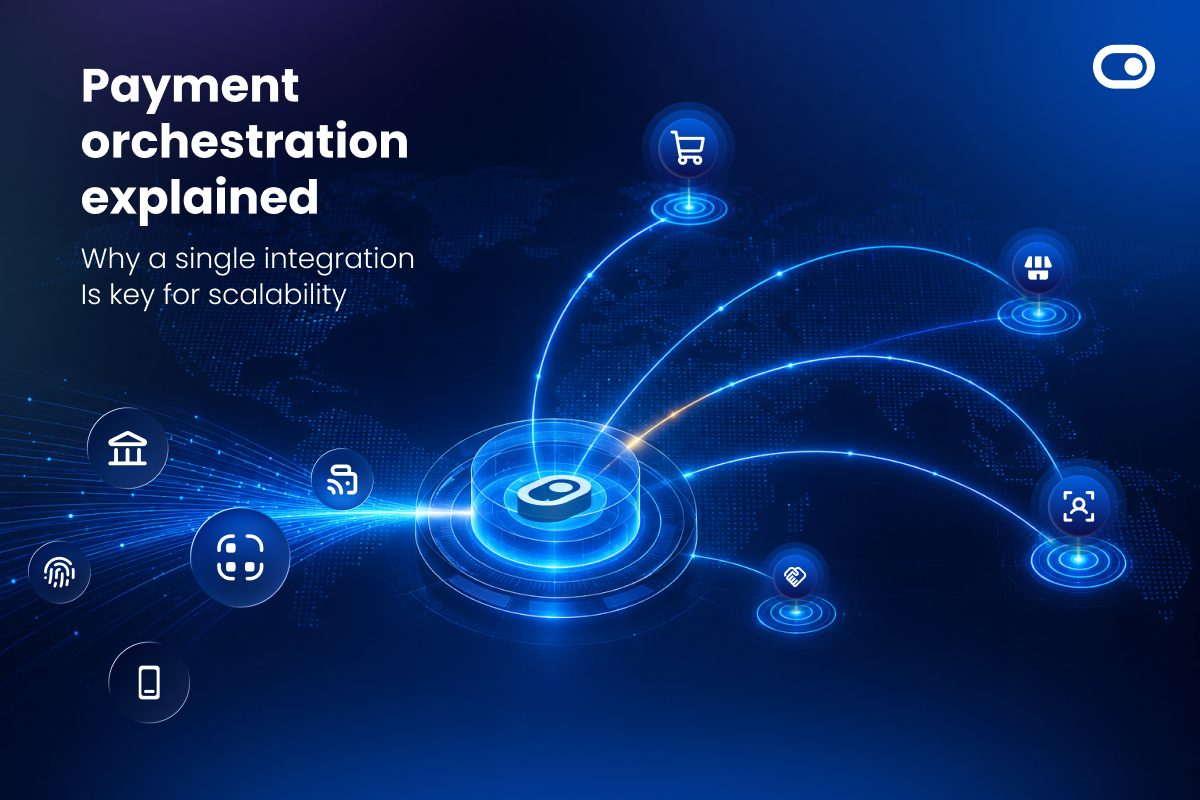
Zota was specifically designed to solve the core challenges of operating in emerging markets. Our unified API is the solution to high total cost of ownership (TCO), as it eliminates the need for numerous separate integrations. With support for over 1000 payment methods, our platform enables you to implement a deep localization strategy quickly, activating essential options to improve your payment method adoption rate. Our infrastructure is built to perform reliably in diverse technical environments, ensuring a smooth customer experience that directly improves the first-time user success rate.
Our network enables fast, multi-currency settlements that protect your businesses from currency volatility and release their working capital. By unifying the entire payment flow—from customer-facing localization to back-end financial reconciliation—Zota provides the technology needed to not only measure what matters but also to achieve excellence across all of these new metrics.
The opportunity in emerging markets is immense, but capturing it demands a more sophisticated strategy. It’s time to move beyond simply managing transactions and begin orchestrating your entire payment ecosystem.
Ready to build your growth strategy on the right foundation? Get in touch!
FAQ
Why do legacy metrics like Approval Rate and ATV fail in emerging markets?
These metrics are misleading because they provide an incomplete view of performance. A high approval rate, for example, fails to account for potential customers who abandon the process because their preferred local payment method is unavailable. Similarly, a focus on a high ATV can be a strategic error in markets where success is often defined by a high frequency of small transactions.
What is the most important initial metric for a FinTech entering a new emerging market?
The payment method adoption rate is the most critical initial metric because it is a direct measure of product-market fit. If customers are not using the local and trusted payment options provided, it signals a significant disconnect between the product offering and the needs of the local market.
How does settlement speed impact merchants in volatile economies?
In economies with high inflation or currency fluctuations, delays in settlement can significantly decrease the actual value of a merchant’s funds. Therefore, fast settlements are essential for protecting profits, managing cash flow effectively, and ensuring overall financial stability.
What is Total Cost of Ownership (TCO) for payments, and why is it important?
TCO includes not only the visible transaction fees but also all associated hidden costs. These typically involve engineering resources for multiple integrations, compliance staff to navigate regional regulations, and the manual effort required for financial reconciliation. A high TCO is important to monitor because it can severely hinder a company’s ability to scale profitably.
How does a unified API like Zota’s solve these challenges?
A unified API replaces a complex system of individual integrations with a single connection. This approach dramatically lowers the total cost of ownership (TCO), enables the rapid activation of hundreds of local payment methods, simplifies global compliance, and streamlines financial operations like multi-currency settlements. It addresses both customer-facing and internal operational challenges at the same time.