Table of contents
Payment gateways and payment processors sit right next to each other in every online transaction, and business owners often use the two terms as if they mean the same thing. They don’t. A gateway captures and encrypts the payment data a customer enters. A processor takes that data and moves the money itself. Mix the two up and you can end up choosing the wrong payment stack, missing a fraud safeguard, or paying twice for something you already have covered.
What is a payment gateway?
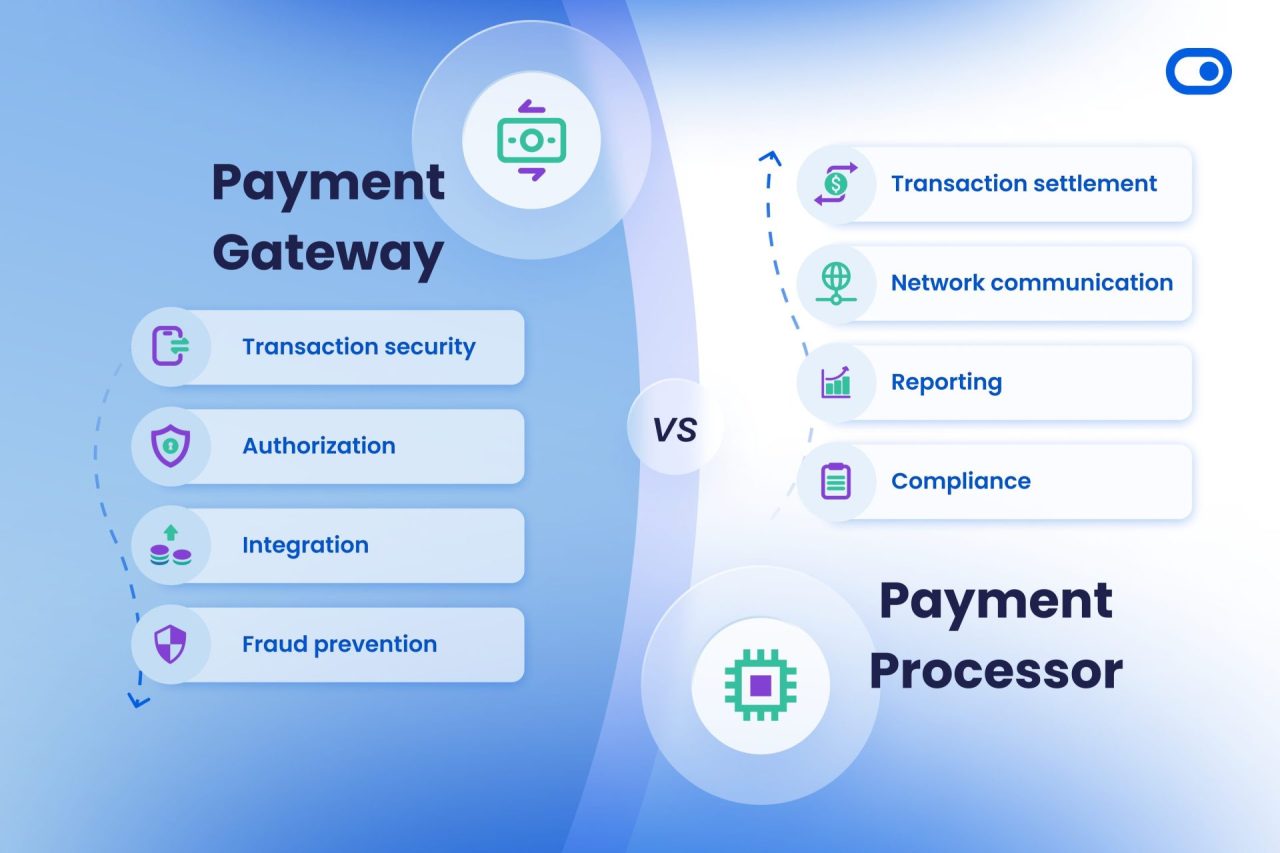
A payment gateway sits between your checkout page and the payment processor. When a customer checks out on your site, the gateway grabs their payment details, encrypts them, and sends them to the processor. The processor then talks to the card networks and the banks involved, the customer’s issuing bank and your acquiring bank, to get the transaction approved. Think of it as the digital version of a card reader at a physical till: it reads the payment information and passes it along, and it never touches the money itself. Along the way, gateways run instant checks that flag whether a transaction looks safe enough to move forward.
This setup describes card payments. If your business takes alternative payment methods like e-wallets, bank transfers, or mobile money, the issuing and acquiring bank structure doesn’t carry over the same way. The gateway still captures and routes the transaction, but authorization runs through the APM provider’s own systems instead.
What Is a Payment Processor?
A payment processor routes the encrypted data to the payment network and the issuing bank, gets back an approval or decline, and reports that result to the gateway. Once a transaction clears, the processor also handles settlement, which is the actual transfer of funds from the customer’s bank into the business’s account, usually batched at the end of the day. Processors carry more of the regulatory weight too, keeping records for standards like PCI DSS and giving businesses the reporting they need to reconcile what came in against what settled.

Payment Gateway vs. Payment Processor: Key Differences
Front-End vs. Back-End
The clearest way to separate the two is by location. The gateway is front-end: customers interact with it directly, whether that’s a hosted checkout page or a POS system. The processor works back-end, invisible to the customer, moving data and money between financial institutions long after someone has clicked pay. Think of a restaurant. The gateway is the waiter taking your order at the table. The processor is the kitchen turning that order into the meal that actually arrives.
Data vs. Money
A gateway’s job stops at data. It captures payment details, encrypts them, and sends them on, never touching actual funds. A processor’s job starts once that data lands, and it’s the one authorizing the transaction, settling funds, and keeping the ledger straight between banks. Gateways handle information. Processors handle the transfer.
Online vs. In-Person Payments
Gateways are built for card-not-present transactions: online checkouts, subscription billing, in-app purchases, anywhere a customer isn’t handing over a physical card. Processors work across both online and in-person channels. The same processor settling your web sales also settles the transactions running through a physical point-of-sale terminal. A business running both an online store and a retail counter typically needs one processor relationship, but may run separate gateway integrations for each channel.
Security and Transaction Processing
Security responsibilities split along that same line. Gateways encrypt and tokenize payment data the moment it’s entered, so raw details never sit unprotected on a business’s servers. Processors take on a different kind of risk: verifying the transaction is real, checking it against fraud rules at the network level, and making sure the funds movement meets regulatory requirements. Both layers work at once. A transaction that clears the gateway’s encryption checks still has to pass the processor’s authorization and compliance checks before the funds land in a business’s account.
Integration With Business Systems
Setting up each one looks different too. Gateways get most businesses moving fast: many offer an API, a plugin for whatever ecommerce platform you’re already running, or a prebuilt module you can drop straight into checkout, so you can start taking online payments without months of development work. Processors ask for more upfront. You need a merchant account before a processor will move money on your behalf, and while banks used to be the only place to open one, most processors now bundle merchant account setup into their own service, along with the compliance checks that come with it. That’s part of why the underwriting and onboarding process for a processor tends to run longer than plugging in a gateway.

Payment Gateway vs. Payment Processor: Direct Comparison
| Aspect | Payment Gateway | Payment Processor |
| Primary role | Captures and encrypts payment data | Authorizes the transaction and moves funds |
| Where it operates | Front end, at checkout or the POS | Back end, across payment networks and banks |
| Security focus | Protects data in transit | Validates the transaction and enforces compliance |
| Analogy | The envelope sealing the message | The postal system delivering it |
How Does a Payment Gateway and Processor Work Together?
It is important to have both a payment gateway and a payment processor in place to ensure smooth and secure online transactions. While they each perform different functions, they essentially work in tandem to facilitate online payments. Once a customer initiates an online transaction and the payment gateway sends the data to the payment processor, it is the job of the processor to communicate with the relevant financial networks to authorize and settle the transaction. Once approved, the processor facilitates the transfer of funds from the customer’s bank to the business’s bank, completing the transaction cycle.
By understanding the unique roles of payment gateways and payment processors, online business owners can gain a more holistic awareness of the necessary components of the online payment process. This will help them make informed decisions about their payment infrastructure and implement safe, secure, and efficient systems that will optimize their payment flow. By doing so, companies will enhance their transaction security, and provide a frictionless payment experience for their customers.
Payment Gateway vs. Payment Processor: Which One Do You Need?
If you’re already working with a processor and an acquiring bank, and you only need to enable online payments, a payment gateway can plug into that existing relationship without extra processor fees. This is common for established businesses that already have banking relationships in place and want to keep them.
If you’re setting up payment enablement from scratch and don’t have banking relationships in place, you need a processor before the gateway question matters at all. Some processors include a gateway as part of the package. Others expect you to bring your own.
What to Consider Before Choosing a Provider
A few practical factors tend to matter more than the gateway-versus-processor label itself. Your business model comes first: a pure online store has different needs than a business also running a physical till, and that shapes whether you need one gateway or technology that provides access to many more.
Fee structure matters too, since gateways often charge a flat monthly fee while processors usually take a cut per transaction, and the two can stack in ways that are easy to miss when comparing quotes.
Integration effort varies a lot between a plug-and-play hosted checkout and a fully custom build on your own site, so weigh that against how much development time you actually have. And if you sell across borders, check that whatever you choose supports the currencies and payment methods your customers actually use, not just cards issued in your home market.
Where Zota’s Payment Gateway Technology Fits
Zota’s platform uses borderless payment gateway technology to provide global businesses the ability to enable payments from customers based around the world, offering widely used payment solutions in each region. Our ‘One Application, One Integration’ methodology is designed to concentrate all necessary payment systems into one secure environment. This grants companies the ability to integrate all the necessary platforms and integrations in an easy-to-use payment hub, the Metagate™.
At Zota, we’re committed to empowering online businesses with comprehensive payment solutions that allow them to expand their business into emerging markets across the globe. For more information about how Zota’s integrated payment solutions can benefit your online business, feel free to reach out to our team of experts.