Your finance team is running transactions across three regions. Customers in Brazil pay through Pix. Customers in Kenya prefer mobile money. Customers in Thailand reach for a local eWallet. Each one expects a checkout experience that feels native to how they already move money, and your job is to make all of that work behind a single integration.
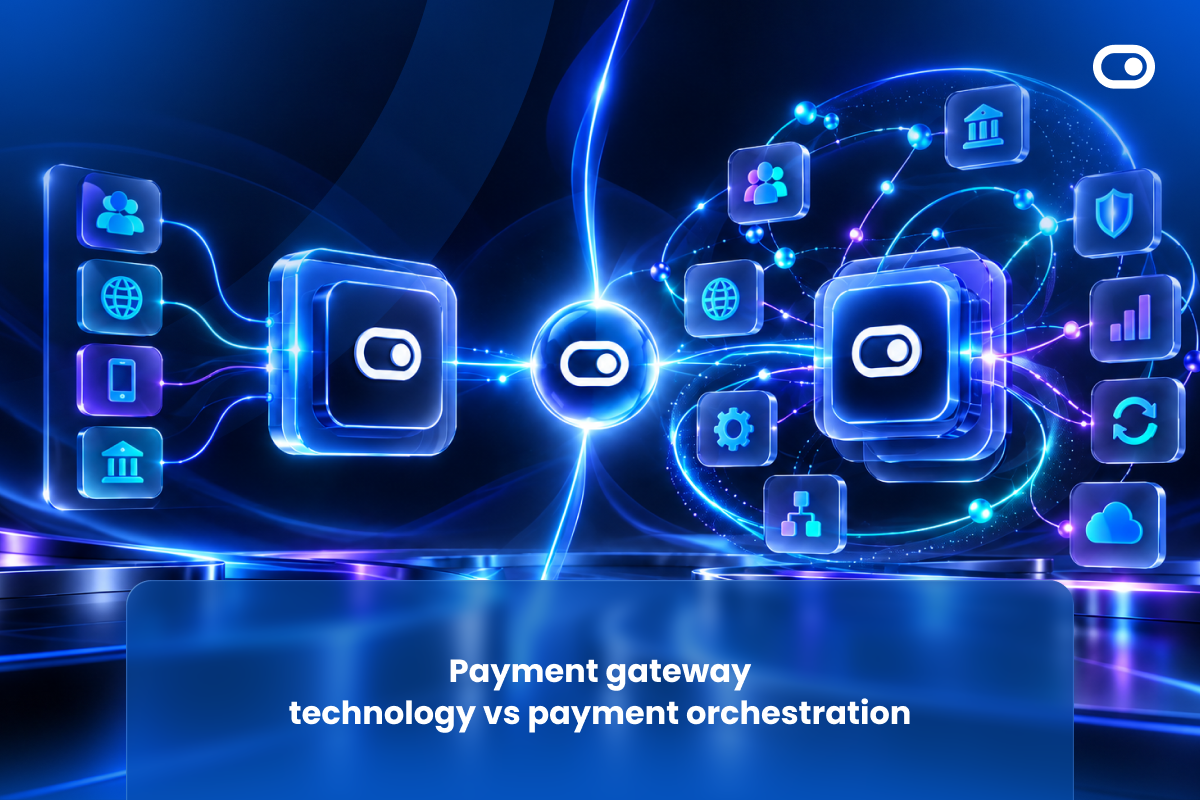
Three terms keep coming up when you search for a solution: payment gateway, payment gateway technology, and payment orchestration. Most comparison articles treat the first two as the same thing. They aren’t, and that confusion leads businesses to pick the wrong solution or overbuild their stack before they need to.
This guide breaks down how each approach works and how to figure out which one your business needs.
What is the difference between a payment gateway and payment orchestration?
A payment gateway handles connectivity and execution. It securely transfers transaction data between your checkout and the acquiring side, giving you access to payment methods, processors, and acquiring connections through a single integration. Some gateways connect you to a narrow set of methods in one market. Others, like the Metagate™, connect you to over a thousand alternative payment methods across dozens of countries through one API. Mobile money in Nigeria, Pix in Brazil, eWallets in Thailand, all routed through the same integration even though the underlying payment rails differ from country to country.
Payment orchestration handles selection and routing. An orchestration platform sits above your PSPs rather than replacing them. In most setups, you hold your own contracts with each provider, though commercial models vary. The orchestration layer evaluates each transaction and routes it to whichever provider gives the highest chance of approval, based on currency, geography, and historical success rates.
The distinction comes down to what problem you’re solving. If you need broad reach into emerging markets through a single connection, a payment gateway with deep local coverage gets you there. The Metagate™ gives you that reach, with one integration into a payments marketplace that spans regions most gateways don’t touch, and can optimise routing within that network. If you already work with multiple providers and need to optimise how transactions flow between them, orchestration gives you that decision layer across your existing PSP relationships.
Key differences Between a Payment Gateway and Payment Orchestration
Transaction routing and optimization
A payment gateway provides the technical infrastructure connecting your payment flow to payment methods and processing rails. Depending on how the gateway is built, it can support multiple methods, multiple connections, and its own internal routing logic through a single integration. For businesses with concentrated volume in familiar markets, that infrastructure covers the job.
Payment orchestration is a separate technology layer. It sits across multiple payment providers or processing connections and manages how transactions flow between them, applying routing logic based on parameters you define. You’re optimising at the provider level, deciding which PSP should handle a given transaction based on the criteria that matter to your business.
The Metagate™ operates as a payment gateway technology with a broad connected network spanning 1,000+ alternative payment methods across emerging markets. Where multiple available connections within that network can support a payment flow, the Metagate™ can apply routing logic within its own infrastructure. Some of those routing capabilities overlap with what orchestration platforms offer, though the underlying architecture and scope are different. Orchestration manages flows across your external provider relationships. The Metagate™ routes within its own connected marketplace, giving you access to region-specific payment methods that most individual gateway or orchestration setups wouldn’t reach without additional integrations.
Failover protection
A traditional gateway going down for maintenance means every transaction fails until it comes back. Payment gateway technology with a wide provider network builds redundancy into its own infrastructure. That’s orchestration’s core job, just performed one layer down: if a specific PSP connection for a payment method stalls, Metagate™ reroutes to another that reaches the same method, to minimize checkout disruption.
Vendor lock-in
A traditional gateway locks your checkout, reporting, and data into one provider’s system. Migrating later is expensive, and most of these providers only cover developed markets well, so you end up onboarding a second PSP the moment you expand into new regions.
Orchestration platforms let you swap providers without rebuilding your checkout. That flexibility helps when you’re coordinating several PSPs across different markets.
Zota’s Metagate™ removes the need for that coordination. Sincethe Metagate™ already connects you to 1,000+ alternative payment methods through one API, your emerging market coverage is built in. One integration, no stacked PSP contracts, and no second migration when you enter a new country.
Integrations
A traditional gateway gives you one API for one market. The moment you need local wallets in Thailand, mobile money in Kenya, and Pix in Brazil, you’re building separate integrations for each, with separate onboarding and KYC for every one.
Orchestration routes transactions across multiple PSPs under one layer, but you still manage each provider relationship and contract underneath.
The Metagate™ collapses that down to a single connection point. You integrate once, and the marketplace gives you local payment method access across regions without juggling parallel builds or five different PSP invoices.
Target business
A business with uniform payment preferences in one or two markets can run on a traditional gateway without overbuilding. A business expanding across regions with different dominant payment methods needs broader coverage, which is where the choice between payment gateway technology and orchestration gets meaningful. That inflection point arrives faster for businesses targeting emerging markets where APMs dominate than for one selling in a single European country where cards handle most volume.
Payment gateway technology vs payment orchestration comparison
The table below compares payment gateway technology, using Zota’s Metagate™ as the reference, against a Payment Orchestration Platform.
| Feature | Payment Gateway Technology Provider (Zota) | Payment Orchestration Platform |
| Architecture | A marketplace of payments connecting your checkout to 1,000+ APMs across emerging markets through one API | A routing layer sitting above PSPs you’ve contracted with separately |
| Payment method coverage | Deep APM coverage built into the network: mobile money, eWallets, QR codes, bank transfers | Assembled from whichever PSPs you’ve connected, each contributing its own methods |
| Transaction routing | Routes within Zota’s network, matching each customer to the right local method for their market | Chooses between competing PSPs for the same transaction, based on approval data |
| Failover protection | Redundancy built into Zota’s infrastructure, rerouting to the best-available PSP connection for each payment method | Reroutes a failed transaction to a backup PSP within the same request |
| Vendor lock-in | One vendor relationship, but breadth across 1,000+ APMs reduces the need for others | Low lock-in to any single PSP since you can add or drop them freely |
| Integration complexity | One API, one onboarding process | One integration to the platform, plus multiple underlying PSP contracts |
| Fees | Transparent single-provider pricing, no platform layer fee | Can lower blended cost via routing, though the platform adds its own fee |
| Reporting | One dashboard covering all APMs and regions running through Metagate™ | Unified dashboard pulling data from multiple PSPs |
| Time to go live | Faster: one onboarding, one compliance review | Slower: onboarding with the platform and each underlying PSP |
| Ongoing maintenance | One payment partner to manage | Multiple PSP relationships and contract renewals to track |
| Best suited for | Businesses expanding into APM-heavy emerging markets needing broad coverage in one stack | Businesses routing high card volumes across competing acquirers in developed markets |
When should you use payment gateway technology?
Payment gateway technology is the right foundation when you need broad coverage across emerging markets without managing multiple provider relationships. A marketplace-model gateway like Zota connects you to the APMs your customers actually use, from mobile money in Africa to Pix in Latin America to local wallets in Southeast Asia, through one integration.
It’s also the cleaner choice when engineering bandwidth is limited. One API, one support contact. For a trading platform enabling payment solutions across Africa, Southeast Asia, and Latin America, payment gateway technology with deep APM coverage solves the problem without adding a routing layer on top.
However, a traditional gateway built for card processing in Western Europe won’t serve you in markets where cards barely exist. Payment gateway technology built as a payments marketplace, with over a thousand APMs and processing across 50+ currencies, is a different proposition entirely, even though both fall under the “gateway” label.

When should you use payment orchestration?
Orchestration earns its place once you’re already working with multiple PSPs and need a system to decide which one handles each transaction. That shows up most for businesses processing high card volumes across developed markets, where several acquirers compete for the same traffic and small approval rate gains translate into real revenue.
It also makes sense once you’ve built relationships with several regional providers and want routing intelligence across them without rebuilding your checkout each time. Where orchestration adds less value is when your payment gateway technology already covers your APM and geographic needs through its own network. Layering orchestration on top then adds complexity without a clear optimization target.
Do you need both a payment gateway and payment orchestration?
Every business running orchestration still uses gateway connections underneath, since orchestration coordinates between gateways rather than replacing them. The real question isn’t gateway or orchestration as an either-or. It’s whether your gateway technology already covers your needs, or whether you need several providers managed by an orchestration layer.
A business in emerging markets where APMs vary by country can often reduce the number of provider relationships it needs, and the need for orchestration with it, by choosing gateway technology with comprehensive coverage. A business spanning developed and emerging markets with a mix of card and APM volume might need both: gateway technology for APM coverage in emerging regions, other providers for card processing elsewhere, and orchestration tying it together.
How to choose the right payment strategy
Assess transaction volume
Pull six months of transaction data first. A business clearing a few hundred transactions a month in one currency won’t see meaningful gains from orchestration’s routing optimization. High-volume businesses processing thousands of transactions across multiple markets have more room to improve approval rates, whether through gateway technology’s coverage or orchestration’s routing.
Evaluate geographic footprint
Map your customers to their actual payment preferences. If you’re expanding into regions where mobile money, eWallets, and instant bank transfers dominate, you need a provider that treats those APMs as core infrastructure rather than an afterthought. A traditional gateway can’t deliver that kind of coverage on its own.
Calculate downtime costs
Work out what an hour of payment failures costs your business. A subscription service recovers most failed renewals on retry. A forex platform loses trades the moment a payment fails, because the market has already moved. The higher that cost, the more you need built-in redundancy, whether from gateway technology’s network or orchestration’s failover across PSPs.
Where Zota fits into this picture
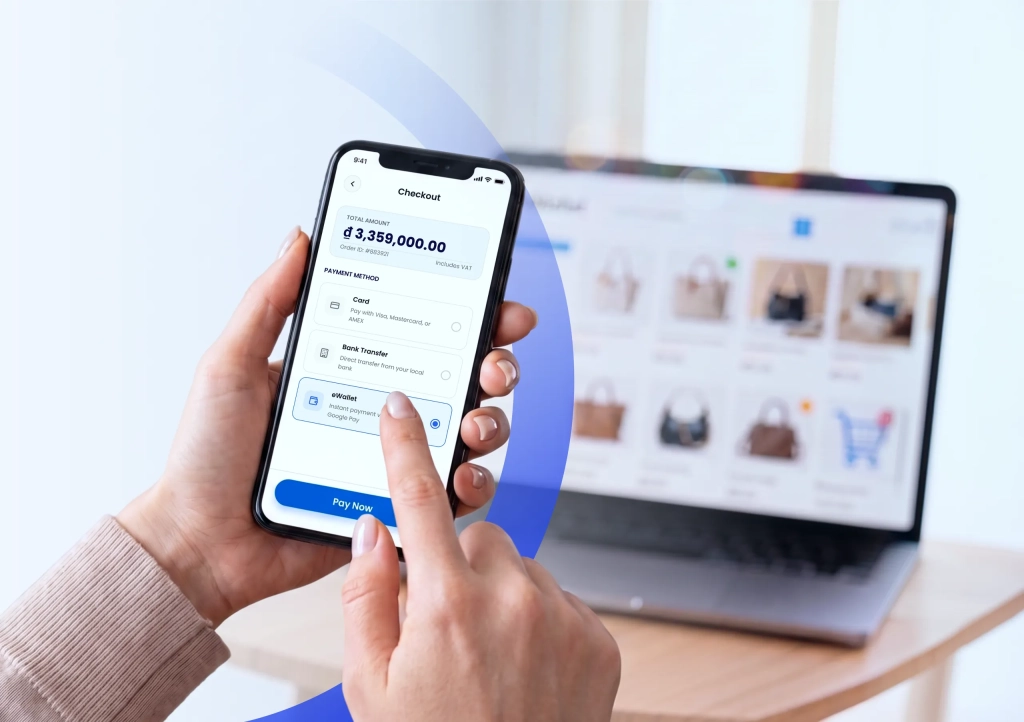
Zota is a payment gateway technology provider built as a marketplace of payments. Through Metagate™ , you connect to over a thousand alternative payment methods across emerging markets through one API. That puts it in a different category from a traditional gateway, which connects you to one PSP, and structurally different from orchestration, which coordinates between multiple separate gateways you’ve contracted with yourself.
The practical difference comes down to what each one solves. Orchestration solves redundancy: picking the best of several competing providers for the same transaction type, usually cards, usually in developed markets. Zota solves reach: one relationship giving you access to non-overlapping local payment rails across dozens of markets, plus the settlement layer underneath it, since Zota handles multi-currency processing across 50+ currencies, and manages payouts directly rather than sitting on top of contracts you’d otherwise sign yourself.
That reach doesn’t skip the routing problem orchestration exists to solve. It absorbs it. Inside the Metagate™ own network, your transaction still gets matched to whichever PSP connection reaches the customer’s chosen payment method fastest and most reliably, and if that connection stalls, you get rerouted to another one without the checkout going down. You just never see the multiple contracts, multiple integrations, or separate routing vendor that orchestration would otherwise require you to manage.
Conclusion
The gateway versus orchestration question comes down to what problem you’re solving. A traditional payment gateway handles straightforward, single-market connections. Payment orchestration coordinates between multiple providers to optimize routing for card-heavy, high-volume businesses. Payment gateway technology gives you the regional breadth and APM coverage that growing businesses need when expanding into emerging markets, along with the settlement infrastructure underneath, without the multi-provider complexity orchestration introduces.
Start with what your customers need and where they are, not with what sounds more sophisticated, and the right architecture becomes a lot clearer.
FAQs
Is payment gateway technology just another name for payment orchestration?
Payment gateway technology is not another name for payment orchestration, even though both promise to simplify a messy payments stack. Gateway technology, in the marketplace sense, means one provider building broad reach into local payment rails so you only ever sign one contract. Orchestration means you’ve already signed contracts with several PSPs and want a routing layer deciding which one handles each transaction. One collapses your provider count. The other manages several providers you’ve deliberately kept. They solve overlapping problems from opposite directions, which is why so many comparison pages flatten them into the same thing.
How many countries and payment methods does Zota’s Metagate™ actually cover?
Zota’s Metagate™ covers over a thousand alternative payment methods across dozens of countries, spanning mobile money, eWallets, bank transfers, and QR-based methods, with processing available across 50-plus currencies. That breadth is what lets one API stand in for what would otherwise be a patchwork of separate regional integrations. If your roadmap includes markets in Africa, Southeast Asia, or Latin America where cards aren’t the default, that coverage tends to matter more than any single feature comparison.
How many payment gateways does a typical orchestration platform manage at once?
Most orchestration platforms manage somewhere between a handful and a dozen connected gateways, depending on how many markets and payment methods a business needs covered. There’s no fixed number, since it scales with your contracts, not with the orchestration software itself. A business processing mostly cards across two or three developed markets might only need two or three competing acquirers in the mix. A business chasing approval-rate gains across a dozen countries will often end up managing far more gateway relationships than the orchestration layer alone can make simple.
What are the signs your payment gateway needs to become payment gateway technology or orchestration?
Your payment gateway is telling you it’s time to change when customers in a new market keep abandoning checkout because their preferred payment method isn’t there, or when a single provider outage takes your entire payment flow down with it. A rising decline rate that doesn’t match your fraud settings is another signal, along with an engineering backlog full of requests to add “just one more” local payment method. If the gap is about geographic coverage, gateway technology with a broad marketplace of APMs usually solves it faster. If the gap is about squeezing more approvals out of PSPs you already use, orchestration is the better fit.
Can you run payment orchestration without a payment gateway underneath it?
A gateway still sits underneath every orchestration platform, because orchestration coordinates between gateways rather than replacing them. Your transaction has to reach an acquirer or processor somehow, and a gateway is how it gets there. Orchestration decides which gateway handles that trip, and how fast you get rerouted if the first one stalls. Picture a dispatcher assigning a job to whichever driver in the fleet is free, not a brand new vehicle showing up.
Zota runs a version of that same dispatching, one layer down. Inside the Metagate™ network of 1,000+ APMs, your transaction gets matched to the right local method for that market, and if a rail fails, you get rerouted without the checkout going dark. The difference: this happens inside one provider relationship instead of across a handful of PSPs you’d otherwise contract with separately, which is the split this whole piece keeps circling back to.